Why 3D STEP Files Are Still Underused in Sheet Metal Quoting
In many sheet metal businesses, quoting is still driven by 2D DXF files, even when a 3D model already exists. This is not because 3D STEP files lack value, but because the industry built its habits around cutting machines that ultimately require 2D profiles. Over time, DXF became the default, even when it introduced extra work, assumptions, and risk.
More Information Means Less Guesswork
A 3D STEP file carries far more intelligence than a flat DXF. Material thickness, bend information, part relationships, and overall geometry are already defined. When this information is used early in the quoting process, it removes guesswork. Instead of interpreting a drawing or cleaning up a customer supplied DXF, the estimator works directly from the design intent. This results in faster quotes and fewer mistakes.
Assemblies Reveal the True Scope of Work
One of the biggest advantages of STEP files appears when dealing with assemblies. A single STEP assembly can contain many parts, often repeated or mirrored. In a traditional 2D workflow, these relationships are easily missed, leading to incorrect quantities or conservative pricing to cover uncertainty. Using 3D import and flattening makes it easier to understand true material usage and realistic part counts.
Reducing Risk Before Production Starts
Quotes created from 2D files often hide problems until production begins, such as incorrect thickness, missing bends, or features that affect cutting time. When a STEP file is used during quoting, these issues become visible much earlier. This protects margins and avoids difficult conversations with customers after an order has already been accepted.
Why Adoption Has Been Slow
Habit plays a major role, but software limitations have also held the industry back. Many quoting systems historically treated STEP files as view only, offering little practical benefit. Without reliable flattening and costing, estimators naturally reverted to DXF based workflows.
Where Smart Cut Quote Fits In
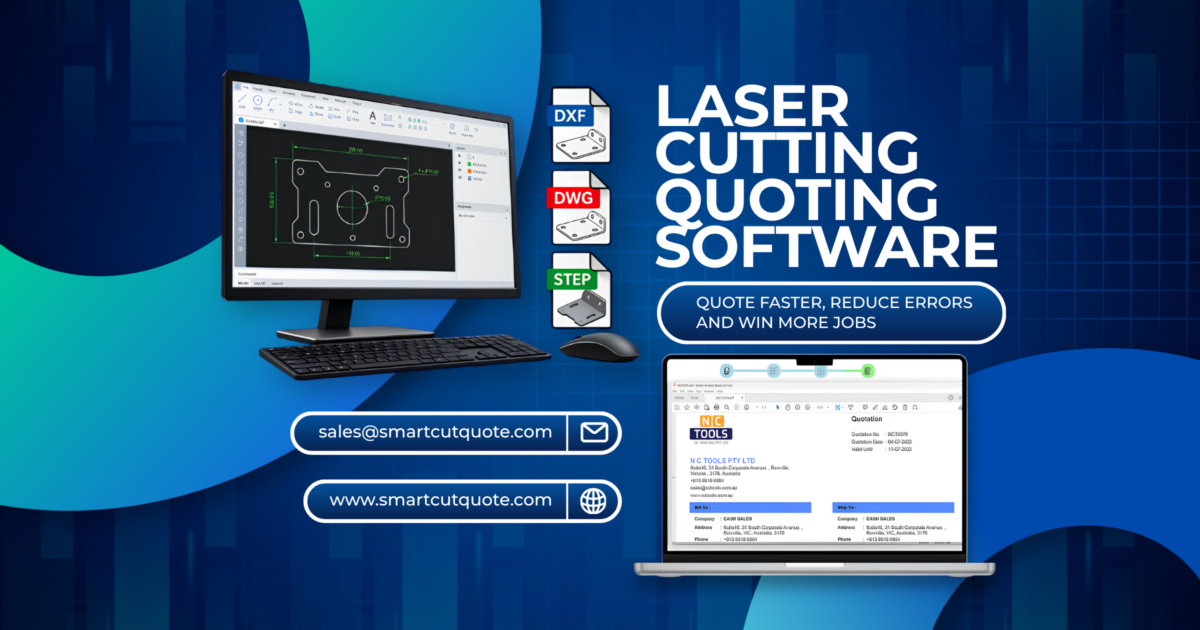
This is where Smart Cut Quote fits naturally into modern fabrication workflows. By supporting 3D STEP import and flattening specifically for quoting, it allows manufacturers to use the data they already receive but rarely exploit. The result is quicker, more accurate quotes that reflect how parts will actually be manufactured, while still working alongside existing DXF based shop floor processes.
In a competitive market, using 3D STEP files for quoting is no longer about being advanced. It is about efficiency, accuracy, and protecting profit.
For more information about Smart cut Quote Software and product inquiries, please contact us at https://nctools.com.au/ or call us on +61 3 8618 6884 Or Visit https://smartcutquote.com/